WHOLESALE KOI FARM K2-2CUFT Bio Filter Media Moving Bed Mbbr 7445051414407 Biofilm Reactor Aquaponics Aquacultur
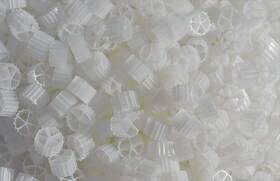
( Brand: Wholesale Koi Farm ), ( Manufacturer Part Number: K2-2CUFT ), ( Model: FBA K2-2CUFT ), ( Part Type: Filter Bed ), ( Product Dimensions: 10 X 20 X 10 Inches ), ( Item Weight: 18.81 Pounds ), ( Size: 2 Cubic Feet ), ( Is Discontinued By Manufacturer: No ), ( UPC: 445051414407 )
Review WHOLESALE KOI FARM K2 Bio Filter Media Moving Bed Biofilm Reactor Mbbr Aquaponics Aquacultur
The **Koi Farm MBBR Biofilter Media (Part Number: 445051414407)** is a cutting-edge, high-performance **Moving Bed Biofilm Reactor (MBBR)** designed specifically for advanced **aquaponics and aquaculture** systems, offering an efficient and sustainable solution for water purification and nutrient recycling. Engineered by **K2 Biofilter**, this innovative media combines superior biological filtration with a compact, space-saving design, making it ideal for both small-scale hobbyist setups and large-scale commercial operations. The MBBR system operates by suspending high-surface-area **polyethylene biofilm carriers** within the water column, creating an optimal environment for beneficial bacteria to colonize and thrive. These carriers, engineered with a **high void fraction (up to 90%)**, maximize oxygen and nutrient exchange, ensuring rapid decomposition of ammonia, nitrites, and organic waste while maintaining crystal-clear water quality. Unlike traditional filter media, which rely on physical filtration or slow biological processes, the MBBR technology accelerates nitrification and denitrification through a dense biofilm layer, significantly reducing the risk of ammonia spikes and improving overall system stability.
What sets this **K2 Biofilter MBBR media** apart is its **modular and mobile nature**, allowing for easy installation in recirculating aquaculture systems (RAS), aquaponics loops, or even integrated pond filtration setups. The media s **durable, corrosion-resistant polyethylene construction** ensures longevity and resistance to biological fouling, while its **uniform, spherical design** prevents clogging and promotes even water flow, minimizing maintenance demands. The system s **high biomass retention capacity** allows for compact filtration, reducing the need for large tanks or multiple filter stages, which is particularly advantageous in space-constrained environments. Whether used in **koi ponds, trout farms, tilapia recirculating systems, or hydroponic-aquaponic hybrids**, this MBBR media enhances biological efficiency without compromising water flow or oxygen levels. Its **plug-and-play compatibility** with existing filtration setups makes it a seamless upgrade for growers seeking to optimize their system s performance while minimizing chemical interventions. By leveraging the power of a **biofilm reactor**, the K2 Biofilter MBBR media transforms waste into a nutrient-rich resource, fostering a closed-loop ecosystem that supports thriving aquatic life and sustainable food production.
### **Pros and Cons of buying a Koi Farm MBBR Biofilter Media (Model 445051414407, K2 Biofilter Media) for Aquaponics and Aquaculture**
#### **Pros**
1. **High Efficiency in Biological Filtration**
The Moving Bed Biofilm Reactor (MBBR) technology provides a large surface area for beneficial bacteria to colonize, accelerating the breakdown of ammonia and nitrites into nitrates. This makes it highly effective for high-density systems where traditional filters may struggle.
2. **Compact and Space-Saving Design**
Unlike traditional biofilters that require large volumes of media, MBBR systems use floating or submerged plastic media that occupies minimal space while maintaining high filtration capacity. This is particularly useful in aquaponics or aquaculture setups where space is limited.
3. **Scalability and Modularity**
The K2 biofilter media can be easily expanded by adding more modules, making it suitable for both small-scale and large-scale operations. This flexibility allows growers to adjust capacity as their system grows.
4. **Low Maintenance Requirements**
Since the media is designed to retain biofilm without clogging, backwashing or frequent cleaning is minimal compared to other filter types. This reduces operational hassle and downtime.
5. **Versatility in System Integration**
MBBR systems can be used in recirculating aquaculture systems (RAS), aquaponics, and even as a secondary filter in larger setups. They work well with both freshwater and saltwater applications, depending on the media type.
6. **Durability and Longevity**
High-quality plastic media (such as polyethylene or polypropylene) resists degradation, chemical corrosion, and physical stress, ensuring long-term performance with proper care.
7. **Improved Oxygen Transfer**
The moving nature of the media (if floating) promotes better oxygen exposure to bacteria, enhancing nitrification rates compared to static media filters.
8. **Reduced Risk of Sludge Buildup**
Unlike deep-bed filters, MBBR systems do not accumulate excessive sludge, which simplifies maintenance and reduces the need for media replacement.
---
#### **Cons**
1. **Initial Cost**
The upfront investment for an MBBR system, especially high-quality media like the K2 brand, can be higher than traditional filters such as sponge filters or canister filters. This may be a barrier for small-scale or budget-conscious operators.
2. **Potential for Media Loss or Damage**
Floating media can be displaced by strong water flow or physical interference (e.g., fish nipping or equipment malfunctions). Secure mounting or containment may be required to prevent media loss.
3. **Dependence on Proper Flow Dynamics**
MBBR systems require consistent and adequate water flow to ensure media movement and biofilm exposure. Poor flow distribution can lead to dead zones where bacteria do not thrive, reducing efficiency.
4. **Media Replacement Over Time**
While durable, plastic media can degrade or become fouled with organic matter over years of use. Eventually, some media may need replacement, adding to long-term costs.
5. **Learning Curve for Optimization**
Achieving optimal performance requires tuning parameters such as flow rate, media loading, and system pH. Inexperienced operators may struggle to balance these factors initially, leading to suboptimal results or equipment stress.
6. **Limited Availability of Spare Parts**
Depending on the manufacturer, finding replacement media or compatible components may be difficult, especially for niche brands. This could lead to extended downtime if issues arise.
7. **Potential for Biofilm Overgrowth**
In some cases, excessive biofilm growth can clog small openings or reduce media porosity, though this is less common with MBBR than with static media filters.
8. **Energy Considerations**
Maintaining proper flow rates may require pumps or aeration systems, which consume energy. While efficient, this adds to operational costs compared to gravity-fed or low-energy filter systems.
---
### **Conclusion**
The **Koi Farm MBBR biofilter media (K2)** is a robust and efficient choice for aquaponics and aquaculture systems, particularly for high-density or recirculating setups. Its ability to provide extensive surface area for nitrifying bacteria, minimal maintenance, and space efficiency makes it ideal for growers seeking a scalable and reliable filtration solution. However, the higher initial cost, potential media management challenges, and need for proper system tuning may deter smaller operators or those with limited experience.
For **small-scale aquaponics or low-density systems**, traditional filters (e.g., sponge filters, canister filters, or trickling filters) might be more cost-effective. For **large-scale aquaculture, high-density aquaponics, or recirculating systems**, the MBBR technology offers significant advantages in performance and efficiency.
---
### **Recommendation**
- **Buy the Koi Farm MBBR (K2) if:**- You are running a **high-density aquaculture or recirculating aquaponics system** where traditional filters would struggle.
- You prioritize **minimal maintenance and long-term reliability** over upfront cost savings.
- Your system has **consistent water flow** and adequate space for media placement.
- You are willing to invest in **proper system monitoring** to optimize flow and biofilm health.
- **Consider alternatives if:**- Your budget is limited, and you can achieve similar results with **lower-cost filters** (e.g., bioballs, ceramic media, or DIY MBBR setups).
- Your system is **small-scale or low-density**, where simpler filtration methods suffice.
- You lack experience in **tuning MBBR systems**, as improper setup can lead to inefficiencies.
For best results, pair the MBBR with **regular water testing (ammonia, nitrites, nitrates, pH)** and **gradual acclimation** of fish/plants to the system. If possible, consult with experienced aquaculturists or aquaponics operators to fine-tune flow rates and media loading.
Details:
It creates the perfect healthy aquatic environment for fish and plant life. The filter media may be used as a static or moving bed. Supports and maintains healthy water conditions. With matured colonized bacteria, this media is the most efficient in supporting nitrification cycle.
Its density is close to the water, so that it can flow through water. This self-cleaning filter media gets you the best results while requiring least maintenance. Just let the media stay in water where they are. Bio Media Plus filter media is research proven to be the most efficient available support a healthy aquatic environment for your fish.
For a static bed filter, you just need to pour the media into sump tank water, container, or mesh bag don't have clean it at all. The K2 Bio Media provides maximum surface area for the growth of beneficial bacteria to support nitrification cycle making this media very efficient. Bio Media Plus is manufactured from VIRGIN HDPE. ADVANTAGES OF K2 BIO FILTER MEDIA: Bio Media Plus filter media has large specific surface area, which can increase the area where vitrifying bacteria attach.
Its easy to clean and simple use maintenance. It is most efficient using micro air bubbles although regular stones will also work. EASY TO USE MAINTENANCE: Its very easy to use the fish filter media. Self-Cleaning and requires little maintenance.
It is usable for in doors or out doors. When used as a moving bed filter the media is self-cleaning since tosses and turns in your. SIZE AND DIMENSIONS: The size of K2 filter media is 10mm x 7mm with a surface area >1,000 m2/m3. The large surface area builds strong good bacteria colonies to support the natural nitrification cycle in converting ammonia nitrites and nitrates.
An air pump is needed to make the filter media move in water. K2 BIO FILTER MEDIA: Moving-Bed Biofilm Reactor Filter Media MBBR is efficient in creating the perfect environment for fish and plant life. Supports the nitrification cycle for natural conversion of ammonia to nitrites, and nitrites nitrates. Bio Media Plus is slightly buoyant and perfect for mechanical or biological filtration.
This makes a much-appreciated for friends, family, and co-workers.
specifications aquariumfilterer:
- brand: Wholesale Koi Farm
- mpn: K2-2cuft
- model: Fba K2-2cuft
- part type: Filter Bed
- product dimensions: 10 X 20 X 10 Inches
- item weight: 18.81 Pounds
- size: 2 Cubic Feet
- is discontinued by manufacturer: No
- upc: 445051414407
general aquariumfilterer:
- condition: New
- Pet Supplies > Fish Aquariums > Filters
offer aquariumfilterer:
- sold: 0
- quantity: 1
- availability: In Stock
- started: April 21, 2026
- options: Ship-to-home
shipping aquariumfilterer:
- cost: $0.00
- class: Standard
- type: Fixed
- transit: 2-6 Days
- service: Standard
returns aquariumfilterer:
- time: 30 Days
- method: Money back
- paid by: Seller
- policy: Returns Accepted
seller aquariumfilterer:
- city: Denver, Colorado
- # reviews: 575
- rating: 99.7%
payments aquariumfilterer:
- other
- credit card: Discover
- wallet: Apple-pay
Wholesale Koi Farm K2-2CUFT Is Similar To:
- Wholesale Koi Farm 686091813936 K3 Bio Media Plus Filter Moving Bed Biofilm Reactor Mbbr For Aquaponi (76.2% similar) The large surface area builds strong good bacteria colonies to support the natural nitrification cycle in converting ammonia nitrites and nitrates. When used as a moving bed filter the media is self-cleaning since tosses and turns in your. It is usable for in doors or out doors. Bio media plus is ...(July 8th, 2025)